From Geology to Gastronomy
#FromGeologytoGastronomy is my science-meets-arts-meets creative process and journey as a former exploration geologist now food explorer and educator. It informs a lot of the interdisciplinary work I do today merging my science and arts bent, alongside my interests. About a decade into my 20-year role in geology, I finally changed careers, bringing with me a peculiar scientific skillset and approach in researching, documenting, and sharing Nigerian food history.
In a 2017 interview on Chiomah’s Blog, I shared a bit about my role “I’m an Exploration Geologist – geologists who ‘discover’, who find things – from water to energy resources, precious minerals and more. “I love exploration, the idea of it – of unearthing, of using known elements to infer and reveal the unknown. There’s such diversity of people, backgrounds, opinions and concepts and I like the fact that Explorers – Exploration geologists – don’t see barriers and they define new frontiers.”
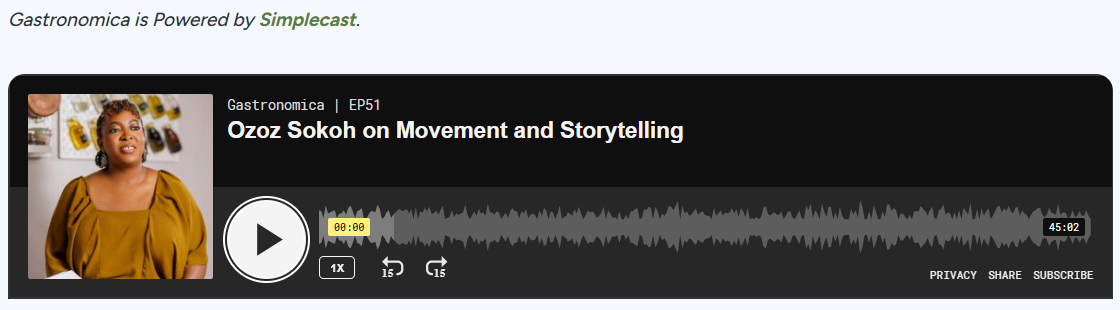
Studying geology has shaped my approach to life, learning, and in working with food. A few years ago, while preparing for a guest appearance on the Gastronomica podcast, my friend, scholar Irina Mihalache asked about my process, and it led me to pull together what you read here, primarily how my studies and early career as an exploration geologist informs what I do in my second career as a food explorer.
Chiomah asked how my knowledge of geology improved my cooking… especially given that cooking is both a science and art? And I shared:
I think my knowledge and practice of science does improve my cooking, as well as most other things. Scientific approaches are consistent in the sequence they put forward from inquiry through to testing and documenting. I approach recipes from many angles
Combinations, of flavours, colours, textures
‘What’s in season’
What elements are culturally relevant to a particular cuisine
Quite often, I have the whole experiment written down, even to the tiniest detail like a pinch of x or half a teaspoon of y. Then I go ahead and test, pen and paper in hand in the kitchen or phone close by – I adjust as necessary.
When things succeed, I note as much; when they fail, I know why and when I want to turn them around/ change an element, I know what to do. The end result often doesn’t seem like the outcome of scientific musing – sometimes it resembles art and almost always, it is delicious.
I discovered food, and culinary diplomacy through the torturous route of a mid-life quarter-life crisis. In 2009, while living and working in the Netherlands, cooking and writing about Nigerian food as though my life depended on it became a way to wade through the murky waters of self and adulthood, difference and self-worth, race, heritage and most importantly, the question of who I was and what on earth I was doing here.
Failure—never sought, always dreaded, impossible to ignore—is the specter that hovers over every attempt at exploration. Yet without the sting of failure to spur us to reassess and rethink, progress would be impossible. Failure is an Option, Hannah Bloch, 2013
Existential questions and angst, and a lot of ‘not-knowing’. As an exploration geologist, I was used to uncertainty and trying to make sense of the unknown by observing the known, the facts. In the midst of diverse people from varied backgrounds with radically different opinions and concepts, I could see one truth – our similarities and sameness even in all the ways we differed.
Today, in my work with food, there are a number of ways/ skills/ concepts/ methods that shape what I do anchored in my training as a geologist
1.Apply the concept of uniformitarianism like Hutton, and Lyell, and their Principles of Geology, The Past is the Key to the Present, and for me, the Present is key to the Future. We cannot make progress without understanding the historic and contemporary, while exploring future possibilities. All three are in sync, and in continuum. My goal - in the area of food history and culture is this - document our culture, create reference frameworks that can be applied in a myriad ways, and use those to shape what’s coming. Memory, oral history, cookbooks play a huge role in this.
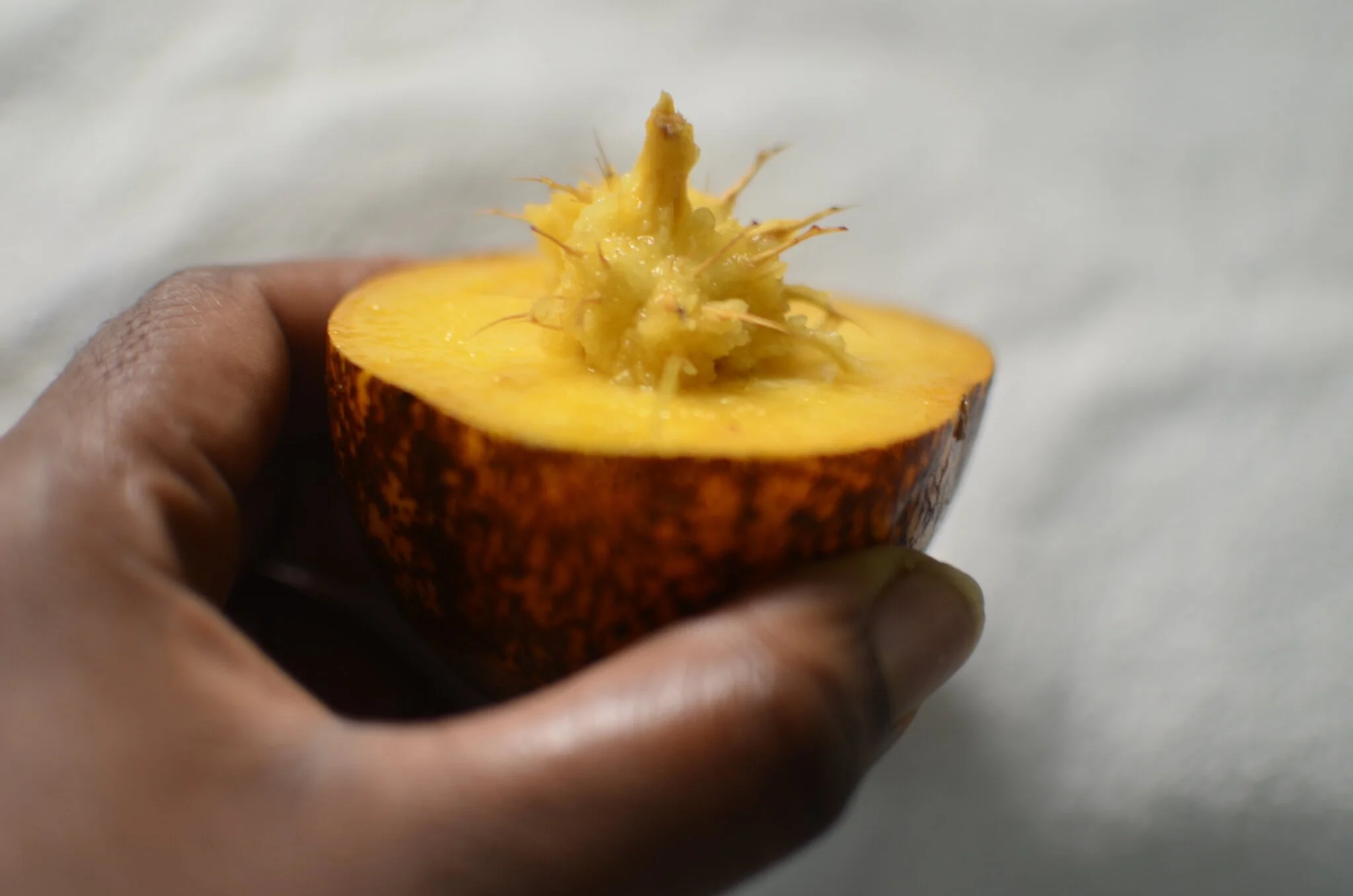
2. Sensory Exploration - the ability to use my senses to describe a thing even without knowing much else about it. Take for instance a fruit I’ve not encountered before and don’t know much about, not to talk of the name, by have a set of descriptors, I can apply that to finding out more about it. Like June Plums, a fruit with a spiky core which I discovered on a Port-Harcourt street and was able to identify through an online search.
3. Moving from Known to the Unknown, in a way, to extrapolate, to figure out, to know. To embark on pattern recognition and pattern-making. Sometimes, it is about backtracking, using prior work and knowledge, like cookbooks to create further understanding. Deductive reasoning in syllogistic ways - here’s a fun example - is also another pathway. Essentially, if a is this, and b resembles a in many ways, then perhaps b is related to a. Also what do we know about a that we could apply to b. For instance, learning how to look for ingredients from other cultures and cuisines that are similar to Nigerian ones by understanding the elementary compositions. So when I need Nigerian garden eggs and can’t find, I turn to Thai eggplants in a pinch. This concept also applies in other
4. All the ways we’re similar, including the role of geology and plate tectonics in that. I’m thinking about the impact of geology on botanical diversity in food, flora, and fauna. Take Brazil and West Africa, once locked, now separated a la Pangea. Beyond the role of transatlantic enslavement and the diffusion of culture, we have prior connections which may have shaped the (ease of) diffusion across those borders. The fields of geobotany and specializations in history, sociology, ecology and more could shed fascinating light on relationships and more.
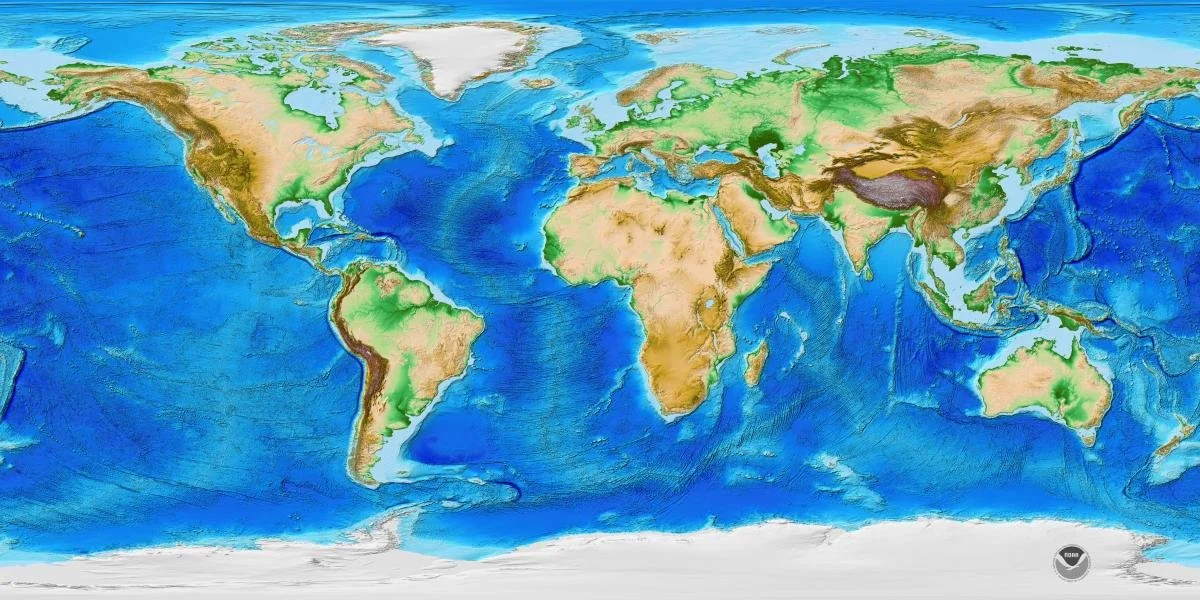
Global relief map. Credit: NOAA
5. Cookbook dating, like carbon dating, is my approach and technique for creating chronologies and understanding sequences of events, which provides insight into the basic frameworks of things. Through these chronologies, layers of meaning can be mined, unearthed, reconstructed, and understood. For instance, using a range of cookbooks across time periods with a specific recipe, you can build an understanding of changes, what events they correspond to, timelines, and a broad understanding of how it’s evolved through time. Isn’t that amazing.
Here’s to bringing all our knowledge to the fore, and continuing to explore our fascinations